Sign In
Upcoming Event
 Free Newsletter

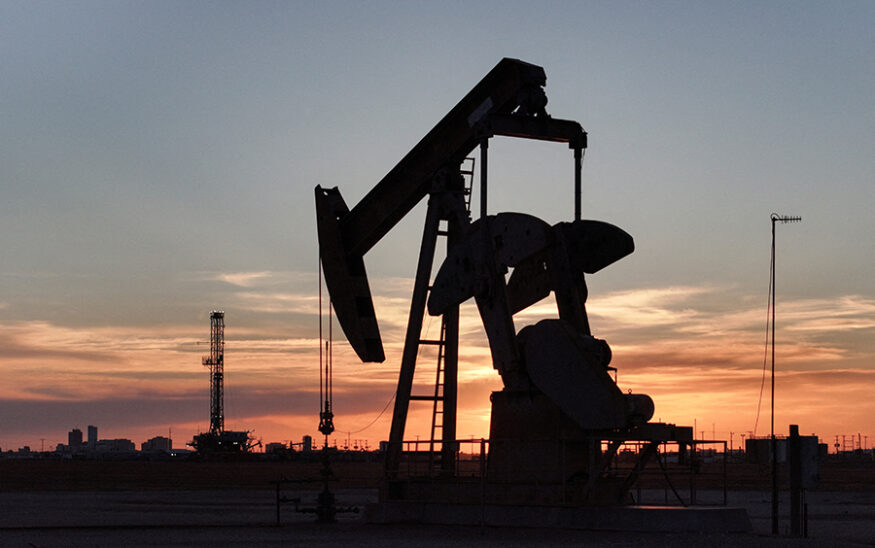
A drone view of a pump jack and drilling rig south of Midland, Texas, U.S. June 11, 2025. REUTERS/Eli Hartman/File Photo
A drone view of a pump jack and drilling rig south of Midland, Texas, U.S. June 11, 2025. REUTERS/Eli Hartman/File Photo
Oil and gas surge as Iran war disrupts Middle Eastern output



Summary:
- Israeli and U.S. strikes on Iran and Tehran’s retaliation forced shutdowns of oil and gas facilities across the Middle East.
- Saudi Arabia shut its largest domestic oil refinery after a drone strike, and Qatar halted LNG production amid conflict.
- Shipping disruptions in the Strait of Hormuz stranded 150 ships, affecting about one-fifth of global crude oil demand.
NEW YORK, March 2 (Reuters) – Oil and gas prices surged on Monday as Israeli and U.S. strikes on Iran and retaliation by Tehran forced shutdowns of oil and gas facilities across the Middle East and disrupted shipping in the crucial Strait of Hormuz.
A sustained rise in oil prices would endanger a global economic recovery and fuel inflation and could push up U.S. retail gasoline prices, a risk for U.S. President Donald Trump and his Republican Party ahead of midterm elections this November.
Brent crude futures rose as much as 13% to $82.37 a barrel, their highest since January 2025, before retreating to trade up $4.92, or 6.75%, at $77.79 a barrel at 11:06 a.m. ET (1606 GMT).
U.S. West Texas Intermediate crude was up $3.87, or 5.77%, at $70.89, having risen more than 12% to $75.33, its highest since June.
OIL AND GAS OUTPUT RESTRICTED OVER IRAN WAR
“While we do not know where these disruptions will end or how the conflict will ultimately resolve, the near-term result is likely to be heightened volatility in global energy markets and a potential rerouting of global oil and gas cargoes,” said Kenny Zhu, research analyst at Global X.
He said the North American energy complex was well positioned to hedge these disruptions should there be any lasting impacts on global energy trade, however.
Oil’s surge on the restart of trading after the weekend was smaller than some had expected. On Sunday, some analysts had predicted oil would open above $90 a barrel and closer to $100.
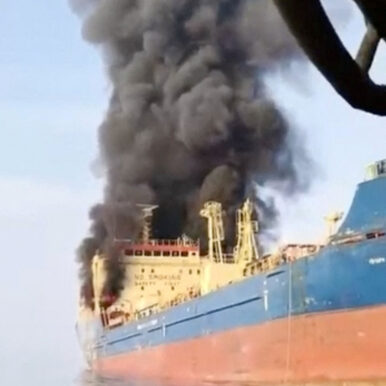
On Monday, Saudi Arabia shut its biggest domestic oil refinery after a drone strike. Qatar halted production of liquefied natural gas and state-owned QatarEnergy was set to declare force majeure on LNG shipments. The widening Iran conflict also left 150 ships stranded at anchor around the Strait of Hormuz after a seafarer was killed and at least three tankers were damaged.
Much of the crude oil from some of the world’s largest producing countries, including Saudi Arabia, Iraq and Iran, is shipped through the Strait, making it one of the world’s most important oil choke points.
“While there is some overland access for crude oil out of the region, it is nowhere near sufficient to replace flows through the Strait,” Morningstar analysts said in a note.
On a typical day, ships carrying crude oil equal to about one-fifth of global demand sail through the Strait along with tankers hauling diesel, gasoline and other fuels to major Asian markets including China and India. The waterway is also the conduit for about 20% of the world’s liquefied natural gas.
The Dutch front-month contract at the TTF natural gas hub <TFMBMc1>, the benchmark European price, was up more than 40% at 45.38 euros per megawatt hour (MWh) on the Intercontinental Exchange.
Asian LNG prices jumped almost 39% on Monday with the S&P Global Energy Japan-Korea-Marker (JKM), widely used as an Asian LNG benchmark, at $15.068 per million British thermal units (mmBtu), Platts data showed.
OIL SUPPLY WAS OUTSTRIPPING DEMAND
Oil pared gains after its steep surge in early Asian trade, a move that analysts attributed to buyers having already factored a risk premium into prices in anticipation of the conflict.
In the view of the International Energy Agency and other analysts, the market is well supplied, with extra output from producers such as the United States, Guyana and OPEC+ expected to outpace global demand this year.
Despite the fears of a glut, at Friday’s close, Brent was up more than 19% this year, while WTI was trading about 17% higher.
“Markets are acknowledging the seriousness of the conflict, but are also signalling that, for now, this is a geopolitical shock, not a systemic crisis,” said Priyanka Sachdeva, senior analyst at Phillip Nova.
OPEC+ agreed on Sunday to raise oil output by 206,000 barrels per day in April. Every OPEC+ producer is essentially producing at capacity except for Saudi Arabia, RBC Capital analyst Helima Croft said.
Globally, visible oil inventories stood at 7.827 million barrels, enough for 74 days of demand, which is near a historical median, Goldman Sachs wrote in a note.
Citi analysts expect Brent to trade between $80 and $90 a barrel this week as the war continues.
JPMorgan said a three- to four-week squeeze on Strait of Hormuz traffic could force Gulf producers to shut output and push Brent above $100.
Analysts are also warning that retail gasoline prices in the U.S., the world’s biggest fuel consumer, may break above $3 a gallon because of the conflict.
U.S. ultra-low-sulfur diesel futures rose to a two-year high on Monday at $2.90, gaining more than 13%, while gasoline futures rose about 4%.
(Additional reporting by Alex Lawler, Florence Tan, Sudarshan Varadhan, May Angel and Susanna Twidale; Editing by Kevin Liffey)
e