Sign In
Upcoming Event
 Free Newsletter

Northrop Grumman seeks permit for new Waynesboro facility
DEQ notice says manufacturing center will use coatings on electronic components
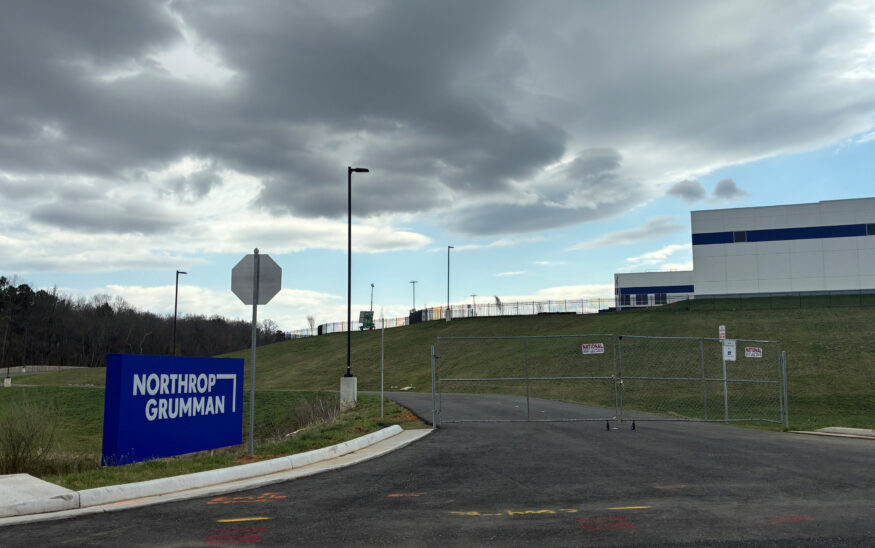
Northrop Grumman's new facility at 1001 Shenandoah Village Dr., Waynesboro. Photo by USA Today Network/Reuters
Northrop Grumman's new facility at 1001 Shenandoah Village Dr., Waynesboro. Photo by USA Today Network/Reuters
Northrop Grumman seeks permit for new Waynesboro facility
DEQ notice says manufacturing center will use coatings on electronic components



SUMMARY:
Northrop Grumman is asking Virginia for an environmental permit for small-scale emissions related to its new, $200 million facility in Waynesboro.
The new manufacturing facility sits on 87 acres and could employ up to 330 people at full capacity, according to the Northrop Grumman’s website page on the Waynesboro location.
“Northrop Grumman’s Blue Ridge Advanced Manufacturing Center, slated to open in 2026, will accelerate high-volume production for American warfighting and defense,” reads the website. “From development to testing to rapid prototyping and full-scale production, this state-of-the-art facility will deliver advanced radars, communications antennas, and electronic warfare capabilities.”
The company requested a state operating permit from the Virginia Department of Environmental Quality (DEQ), which posted a public notice on the application, including a draft permit, to its website. According to DEQ’s understanding, the facility will “assemble and compile electronic components” where “coatings will be applied to some of the components such as fiberglass or plastic circuit cards.”
The draft engineering analysis included in the public notice echoes DEQ, explaining the facility will house “operations to assemble and compile electronic components used in the aerospace industry.” As such, the Waynesboro facility is not expected to manufacture “synthetic organic chemicals” such as per- and polyfluoroalkyl substances, also known as PFAS or PFOA chemicals. However, volatile organic compounds will be used at the facility, such as MIBK, toluene, and xylene.
“These compounds will be used in Northrop Grumman’s coating and solvent operations,” explained Irina Calos, communications manager for DEQ. “Emissions of these compounds will be controlled via use restrictions. This is to say that there is no emissions control equipment associated with solvent use. Northrop Grumman’s … air permit will limit solvent emissions to less than toxic air pollutant exemption thresholds.”
The draft permit includes limits on these chemicals – the facility is not considered a major emissions source and the controlled emissions are expected to be less than 250 tons/yr for each potential pollutant.
In addition, the company will use polysulfides, which can come with an odor. According to the permit application, the company “does not believe” the odors would go beyond the company property due to the amount of the chemicals being used and a HEPA air filtration system.
“Northrup Grumman’s approved Minor New Source Review permit requires that potential odors from polysulfides be [controlled] via a daily use restriction and a charcoal (odor molecule adsorption) system,” Calos said. “Odor concerns may directed to the DEQ Valley Regional Office Air Compliance Manager at (540) 217-7480.”
A public notice seeking public comment on the permit is on the DEQ website. A public hearing can be requested on the permit, but one is not currently listed on the public notice. The DEQ notice says to direct public comment to Debbie Medlin with DEQ:
Address: Valley Regional Office, 4411 Early Road, Rockingham, Virginia 22801
Phone: 540-217-7071
E-mail: [email protected]
The News Leader has reached out to Northrup Grumman’s media team to ask for more information, but has not received a response.
Lyra Bordelon (she/her) is the public transparency and justice reporter at The News Leader.
This article originally appeared on Staunton News Leader
Reporting by Lyra Bordelon, Staunton News Leader / Staunton News Leader
T