Sign In
Upcoming Event
 Free Newsletter

Manning defends U.Va. negotiations with DOJ
Board member made $100M donation to biotech institute
Kate Andrews //December 1, 2025//
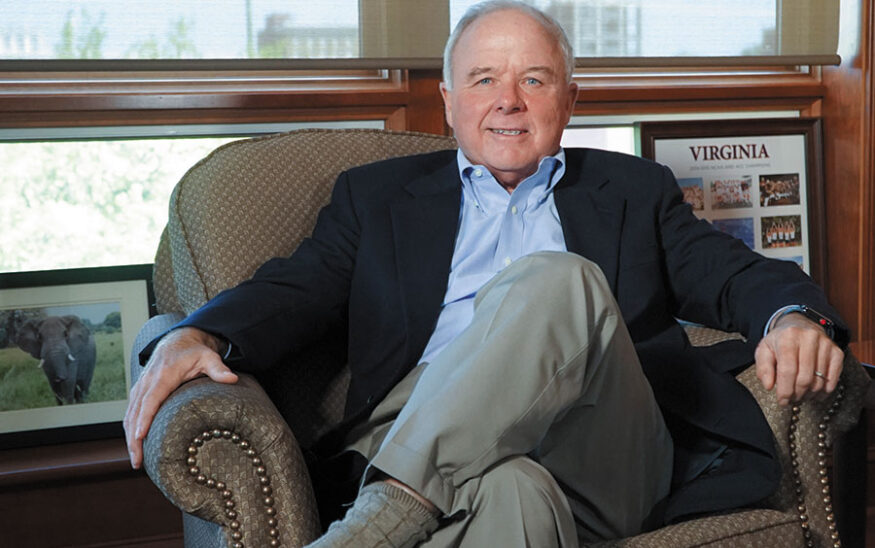
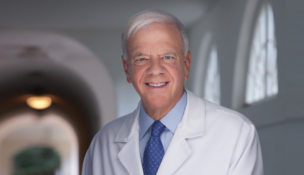
Paul Manning. Photo courtesy University of Virginia
Paul Manning. Photo courtesy University of Virginia
Manning defends U.Va. negotiations with DOJ
Board member made $100M donation to biotech institute
Kate Andrews //December 1, 2025//



Summary:
- Major U.Va. donor and board member Paul Manning defends resignation advice to former U.Va. president
- Manning says in letter “it was clear to me” that DOJ may suspend federal funding if Ryan remained in office
- In Nov. 14 letter, Ryan questioned whether Manning was “carrying water” for governor and U.Va.’s future rector
Charlottesville investor and University of Virginia board member Paul B. Manning sent a letter Monday to U.Va.’s Faculty Senate and fellow board members defending his actions in university negotiations with the U.S. Department of Justice.
Manning, who donated $100 million with his wife in 2023 to launch the $350 million Manning Institute of Biotechnology at U.Va., was one of three U.Va. Board of Visitors members criticized in a letter last month written by former U.Va. President Jim Ryan, who left the presidency in July under political pressure.
Ryan wrote that Manning, along with U.Va. Rector Rachel Sheridan and Vice Rector Porter Wilkinson, pressured him in June to resign by suggesting that the DOJ would take away federal funding from the university if Ryan remained in office and fought the Trump administration‘s allegations of civil rights violations.
Manning said that DOJ attorneys threatened “that if I didn’t resign, they would ‘bleed U.Va. white,'” Ryan wrote in the Nov. 14 letter.
However, the former president wrote that the DOJ’s head civil rights division attorney had publicly disavowed allegations that her department had insisted on Ryan’s resignation in a “quid pro quo” deal, in contradiction of what Manning, Sheridan and Wilkinson had told him before he gave notice June 26.
Ryan further alleged that Gov. Glenn Youngkin, the three board members and attorneys hired by the board had possibly been behind the pressure to resign, instead of the DOJ. “At the very least, we had board members who were apparently more complicit than other universities,” Ryan wrote.
But on Monday, Manning wrote that he, Sheridan and Wilkinson were motivated by “a desire to protect U.Va., its students, faculty, researchers, clinicians and patients, and not by any personal or political agenda, and certainly not by any ill will toward Jim Ryan.”
Manning added that he considers Ryan a friend and that the former president “was one of the reasons my family and I chose to make a significant gift to create the Manning Institute of Biotechnology.”
Also, Manning wrote that he agreed to speak with DOJ officials by phone “one time in June to better understand the risks to the university,” which had received seven letters from the department between April and June accusing Ryan and the university of slow-walking the dissolution of the university’s diversity, equity and inclusion initiatives.
“I held a single phone call with DOJ officials, and that call also included U.Va.’s legal counsel, including outside counsel,” Manning wrote. “After this conversation, the content of which I shared with Jim, and after further review of the aforementioned letters, it was clear to me the DOJ was prepared to suspend federal funding to U.Va. immediately if certain steps were not taken, including a change in university leadership.”
The potential loss of hundreds of millions in federal funding would “have directly jeopardized the work and livelihood of many U.Va. employees, including professors, researchers, physicians and staff,” as well as laboratories and clinics “on which patients and families depend,” Manning wrote.
Ryan’s letter, which has since prompted calls from faculty and staff groups for Sheridan and Wilkinson to resign from the board, depicts a more complex situation.
Sheridan and Wilkinson had already spoken with DOJ attorneys before the board’s early June meeting, when they presented a report to the board, Ryan wrote, although he alleged that neither woman mentioned that the DOJ had insisted on his resignation at that time. Further, Manning had in early June advised the president to “hang on” and not resign.
But Manning’s advice changed on June 16 when the two men met for lunch, Ryan wrote.
Manning “told me that he had heard from both the governor and Rachel about the need for me to resign,” Ryan wrote. “He told me that, as a friend, he did not want me to go through the ordeal of trying to fight the federal government, and he was worried what the DOJ — and other agencies — might do to U.Va., especially with respect to research funding. He also told me that I would likely be blamed for the losses. It was unclear to me whether this conversation was Paul’s idea, or whether he was carrying water for the governor and Rachel.”
Ryan also wrote that Harmeet Dhillon, assistant U.S. attorney in charge of the DOJ’s civil rights division, has “publicly and unequivocally stated — twice — that neither she nor her colleagues asked for my resignation or offered some sort of quid pro quo. That is not what Rachel, Porter and Paul conveyed to me. Who is telling the truth?”
However, Manning wrote, “Based on the information available to me at the time, I ultimately became convinced that federal funding was at risk and would result in an immediate loss of financial support to the university.
“It was, in my mind, a difficult choice between two unfortunate outcomes: real damage to the university, its people, and its academic and research mission, or the premature departure of a leader who had contributed to many successes at the university.”
T