Sign In
Upcoming Event
 Free Newsletter

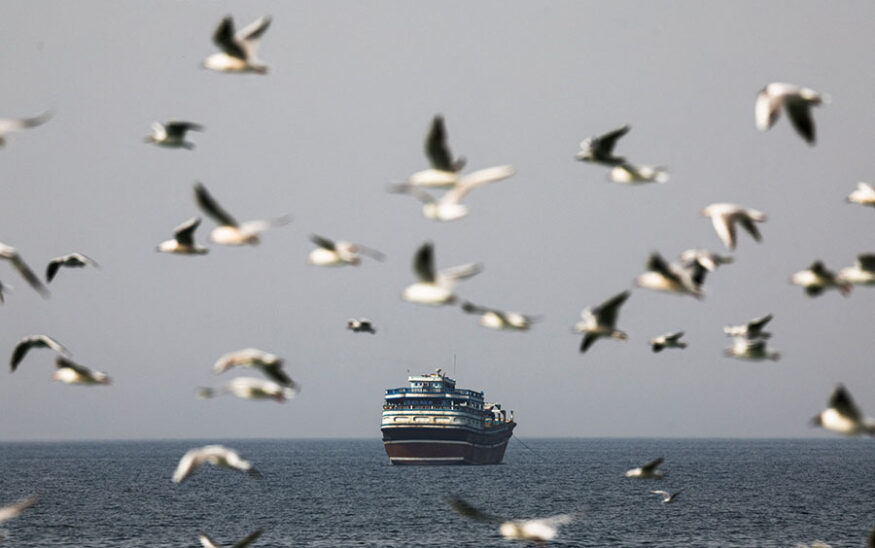
Birds fly near the boat in the Strait of Hormuz amid the U.S.-Israeli conflict with Iran, as seen from Musandam, Oman, March 2, 2026.REUTERS/Amr Alfiky
Birds fly near the boat in the Strait of Hormuz amid the U.S.-Israeli conflict with Iran, as seen from Musandam, Oman, March 2, 2026.REUTERS/Amr Alfiky
Iran conflict disrupts global shipping as tankers are stranded, damaged



Summary:
- At least five tankers were damaged and two crew members killed amid Iran conflict in the Strait of Hormuz.
- Approximately 150 vessels, including oil and LNG tankers, are stranded near the Strait of Hormuz.
- Marine insurers like Gard and Skuld are canceling war risk coverage effective March 5, increasing shipping insurance costs.
LONDON/SINGAPORE, March 2 (Reuters) – Insurance companies are cancelling war risk coverage for vessels in the Gulf as the widening Iran conflict disrupted shipping, leaving at least five tankers damaged, two personnel killed and around 150 ships stranded around the Strait of Hormuz.
Shipping through the strait between Iran and Oman, which carries around one-fifth of oil consumed globally as well as large quantities of gas, has ground to a near halt after vessels in the area were hit as Iran retaliated to U.S. and Israeli strikes.
The disruption and fears of prolonged closure have caused oil and European natural gas prices to jump, with Brent crude futures up as much as 13% as the conflict triggered multiple oil and gas shutdowns in the Middle East. [NG/EU] [O/R]
At least 150 vessels including oil and liquefied natural gas tankers had dropped anchor in the Strait of Hormuz and surrounding waters, shipping data showed on Sunday.
Iran has said it closed navigation through the critical waterway, prompting Asian governments and refiners – key buyers – to assess oil stockpiles.
The tankers were clustered in open waters off the coasts of major Gulf oil producers, including Iraq and Saudi Arabia, as well as LNG giant Qatar, according to ship-tracking data from the MarineTraffic platform.
In the latest incident, Iran’s revolutionary guards said a fuel tanker was burning in the Strait of Hormuz after being hit by two drones, Iranian news agencies reported.
The U.S.-flagged products tanker Stena Imperative was damaged by “aerial impacts” while berthed in the Middle East Gulf, the vessel’s owner Stena Bulk and its U.S. manager Crowley said in a statement on Monday, and a shipyard worker was killed as a consequence of the impact.
On Sunday, a projectile hit the Marshall Islands-flagged product tanker MKD VYOM, killing a crew member as the vessel sailed off the coast of Oman, its manager said on Sunday, and two other tankers were also damaged.
Also on Sunday, a projectile hit the Gibraltar-flagged oil bunkering tanker Hercules Star off the UAE coast, manager Peninsula said in a statement. The tanker returned to anchorage in Dubai on Sunday morning and the crew were safe, Peninsula added.
INSURERS CANCEL WAR RISK COVER
As a result of the incidents, marine insurers are cancelling war risk coverage for vessels and oil shipping rates are set to surge further.
Companies including Gard, Skuld, NorthStandard, the London P&I Club and the American Club said their cancellations would take effect from March 5, according to notices dated March 1 on their websites.
These cancellation notices mean shipping companies with vessels in the region will need to seek new insurance cover at higher rates in order to maintain policies.
“As a result of this fast-moving situation each underwriter is invariably increasing rates or in some instances, for vessels passing through the Strait of Hormuz, even declining to offer terms right now,” said David Smith, head of marine with brokers McGill and Partners.
War risk premiums have risen up to 1% of the value of a ship in the past 48 hours, from around 0.2% last week, industry sources said on Monday, which adds hundreds of thousands of dollars in further costs for every shipment.
“The (war insurance) market is facing what is essentially a de facto close of the Strait of Hormuz, based primarily around perception of threat rather than a tangible blockade,” said Munro Anderson of marine war insurance specialist Vessel Protect, part of Pen Underwriting.
Meanwhile, costs of shipping oil from the Middle East to Asia – already at six-year highs – are set to rise further as the widening Iran conflict is deterring shipowners from sending vessels to the region, market sources and analysts said.
(Reporting by Emily Chow and Jeslyn Lerh in Singapore and Jonathan Saul in London; Additional reporting by Trixie Yap and Ruth Chai in Singapore, Nidhi Verma in New Delhi and Enes Tunagur in London; Writing by Nina Chestney; Editing by Florence Tan, Aidan Lewis and Nick Zieminski)
T