Sign In
Upcoming Event
 Free Newsletter

House subcommittee punts on data center bill, but hopes to ‘continue the work’
Data centers would pay energy, infrastructure costs
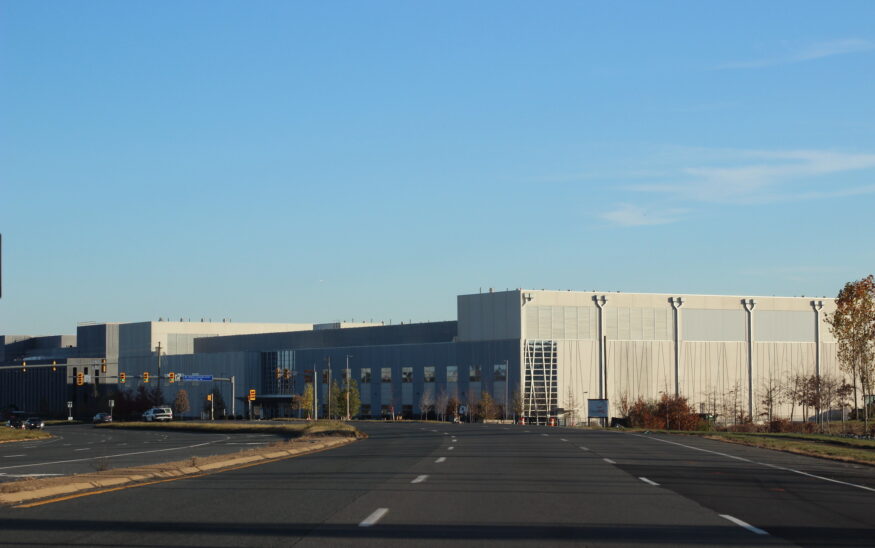
A data center in Ashburn. Photo by Emily Richardson/CNS
A data center in Ashburn. Photo by Emily Richardson/CNS
House subcommittee punts on data center bill, but hopes to ‘continue the work’
Data centers would pay energy, infrastructure costs



SUMMARY:
- House of Delegates subcommittee recommends tabling bill requiring data centers to pay extra infrastructure, energy costs
- Dominion, Appalachian Power oppose bill, saying it removed SCC’s power to set rates
- Delegates say they’ll “keep the conversation going”
RICHMOND — A House Labor and Commerce subcommittee recommended continuing until next session a measure to have data centers pay for associated infrastructure and energy costs, instead of passing them onto residential customers.
Legislators have grappled this session with how to regulate the industry’s intense demands on state and local energy infrastructure as data centers proliferate across Virginia with no sign of slowing.
Del. John McAuliff, D-Fauquier, introduced House Bill 503 to prohibit utility companies from passing energy costs onto households. The junior delegate campaigned strongly last year on minimizing the impact of data centers if elected.
On Tuesday, lawmakers heard testimony for and against the measure before continuing the bill to 2027.
Dominion Energy and Appalachian Power opposed the bill, saying it removed the Virginia State Corporation Commission‘s discretion on how to handle these additional costs.
The SCC recently approved a new GS-5 rate class that takes effect January 2027. That was one reason Nicole Riley with the Data Center Coalition said it was unnecessary to move the bill forward. The SCC also directed Dominion Energy to review its cost allocation methodology in the next rate case, she said.
“With the recent case and the new GS-5 high-load customer rate class; it does have a number of guard rails — specifically, 14-year contract terms, minimum demand charges and exit fees,” Riley said.
Panel members motioned to carry the bill over, but to continue the work and “to keep the conversation going.”
“The goal here is to say if they’re building infrastructure that’s going to be primarily for, or entirely for, large energy-using customers such as a data center, then they have to pay for it, ” McAuliff said in an interview. “So, if 95% [of the infrastructure] is for them, they need to pay 95% of the cost, not just spread it out across everybody else.”
The bill applies to data centers that exceed more than 100 megawatts. A smaller data center can draw up to 18 megawatts, which is enough to power an estimated 4,500 residential homes.
“We’re not here to try to shut them all down, that’s not what the General Assembly’s job is,” McAuliff said. “The General Assembly’s job is to make sure that Virginians are getting a better deal from these companies that are the most powerful, wealthiest companies on the planet.”
Virginia is home to the largest data center market in the world with over 500 operating facilities and an estimated 70% of global internet traffic moving through Virginia’s “Data Center Alley” in Loudoun County.
This position as the global leader may come at a steep price. Increasing energy demands could lead to residential customers paying up to $37 more per month by 2040, according to the Virginia Joint Legislative Audit and Review Committee.
Over in the Virginia State Senate, a measure to help reduce residential energy bills advanced out of committee with an amendment. Senate Bill 253 would shift more energy costs onto data centers served by Dominion Energy, according to reporting by the Virginia Mercury.
Stephen Farnsworth, a professor of political science and international affairs at the University of Mary Washington, said data center policy was a priority of the Democratic majorities in the legislature last year.
“But the gridlock in Richmond meant that the topic was down the road until this year,” Farnsworth said.
Now Democrats have an even larger majority in the House, and a new Democratic governor.
State representatives have made affordability a major talking point this legislative session. In a 2026 Global Strategy Group poll, 94% of state voters listed rising electric and energy costs as a top concern, with 78% blaming data centers for the increase.
“There’s clearly public pressure to reign in the process of significant approvals occurring around the state and it’s clear that leaving most of the authority at the local level is creating significant risks to affordable energy going forward, ” Farnsworth said.
Republicans say there is plenty of generation capacity that needs to be unleashed, and data center demands are not the key driver of rising costs. Requirements of the state’s Virginia Clean Economy Act contribute to higher utility bills, Sen. Mark Obenshain, R-Harrisonburg, said at a Republican press conference in January.
HB 503 would not cost the State Corporation Commission anything or change revenues for full-time employees, according to the bill’s fiscal impact statement.
Capital News Service is a program of Virginia Commonwealth University’s Robertson School of Communication. Students in the program provide state government coverage for a variety of media outlets in Virginia.
l