Sign In
Upcoming Event
 Free Newsletter

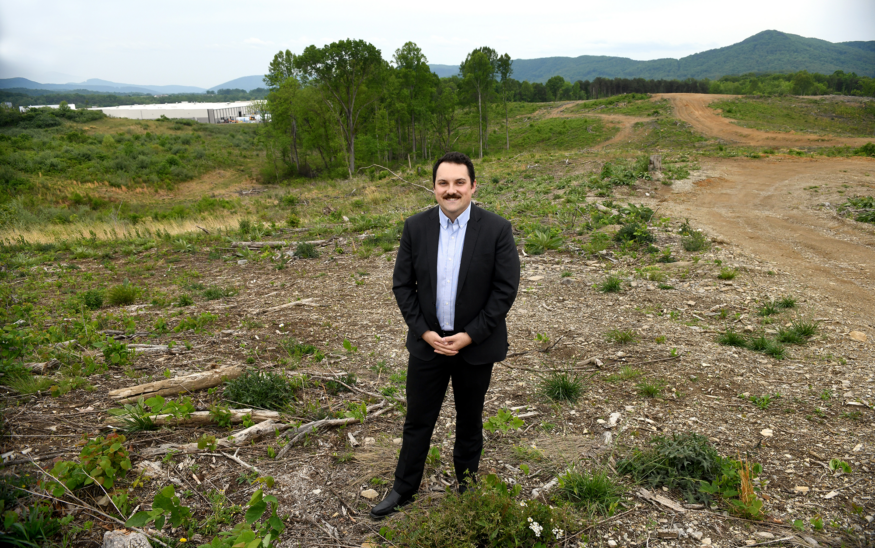
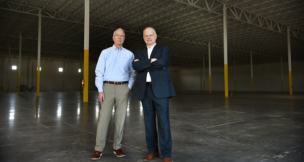
Kyle Rosner, Botetourt County’s economic development director, says that discussions with Google started in early 2024. Photo by Natalee Waters
Kyle Rosner, Botetourt County’s economic development director, says that discussions with Google started in early 2024. Photo by Natalee Waters
Google data centers, tech projects coming to Roanoke Valley



Summary:
- Google to invest $3 billion in Botetourt data center
- Project expected to create at least 150 new jobs
- Munters announces $30 million expansion at Greenfield site
No longer content with letting Northern Virginia dominate data center development in the commonwealth, Botetourt County has lured one of the world’s largest tech companies to the Roanoke Valley.
After purchasing a 312-acre lot at the county’s Botetourt Center at Greenfield industrial park for $14 million last summer, Google plans to build a hyperscale data center campus to accommodate ever-growing global internet traffic and artificial intelligence usage.
Google and local officials say the project will deliver at least 150 new jobs and $3 billion in investment by 2030. Water and energy requirements, however, have led to opposition from residents concerned whether there’s enough resources for the community and Google.
According to a funding agreement the company signed with the Western Virginia Water Authority in October 2025, the data center campus could use up to 8 million gallons of water a day, although at first, the authority will provide a water capacity of 2 million gallons daily, starting in 2028.
Resource scarcity, advanced tech manufacturing and efforts to build a larger regional biotech cluster are also driving significant economic development projects in the New River Valley and Roanoke Valley regions.
In Blacksburg, Virginia Tech is partnering with international mining firm Aclara and the federal government to pilot new refining processes for extracting rare earth minerals for vital magnetic components in electric vehicles, wind turbines, consumer electronics and autonomous factory robots.
Meanwhile, the university is also working with Carilion Clinic in Roanoke to open a new biotech incubator to support startups aspiring to create new therapeutic medications and medical devices.
Early negotiations
Botetourt County officials started discussing the data center project in January 2024 with Google agents, who were operating under an alternative company name for confidentiality.
Kyle Rosner, Botetourt’s director of economic development, says the county saw a strong opportunity there, as utilities and the advanced manufacturing industry have been rising in tandem with data center projects.
With large projects like Google’s plan, the county also has drawn attention of other companies.
Last spring, Munters, a Swedish air and climate control systems company, announced a $30 million expansion in Botetourt that will add 200,000 square feet to its manufacturing center at the Greenfield site where Google is also building.
“You hear nationally how the data center industry and its supply chain have driven so much GDP growth,” Rosner says. “All this data center growth in the U.S. and in Virginia have driven an amazing amount of investment in our electric grid.”
Rosner and other officials say the presence of the Appalachian Power substation in Cloverdale and local manufacturing companies, such as Virginia Transformer Corp. and bucket truck-maker Altec, contributed to Google’s decision.
“We’re connecting a client with real estate, with utilities, with a whole host of connections. … In some cases, you need to go an extra mile right to put a solution, together with partners, that fits their business case and gets them down the road,” says John Hull, president and CEO of the Roanoke Regional Partnership, a business advocacy group composed of local government and private sector leaders. “You have to have those relationships all around and in all directions.”
Hull says the Google project will have knock-on effects beyond the $10 million that officials estimate it will generate in local tax revenue annually.
“It’s key to note that these facilities indirectly support more than 1,000 jobs through contractors and others that work on the facility on an ongoing basis. And I’m not just referring to the construction,” Hull says. “The job multiplier for this sector is extraordinary.”
Environmental concerns
Although Google and Botetourt officials began ironing out details a year and a half earlier, the public wasn’t aware of the plan until June 2025, when Google purchased the 312 acres for $14.06 million. At that point, county officials confirmed data center development, but other details were not released.
In February, Google filed documents with the county revealing that it planned to build three data centers totaling about 921,000 square feet and costing at least $3 billion.
Later in February, a local news organization, the Roanoke Rambler, published information about Google’s dealings with the Western Virginia Water Authority and how much water was expected to be used. According to two agreements, the water authority expects to provide up to 2 million gallons of water daily after the first building opens in early 2028 and up to 8 million gallons a day at full buildout.
In late March, Google released its own announcement about the scope of the project.
Meanwhile, local objections arose. A few dozen protesters gathered outside the county administration building before the Botetourt supervisors meeting in March, and even before the full scope was known, a group of residents formed the Southwest Virginia Data Center Transparency Alliance.
Ben Verschoor, a local office worker and film critic who lives in Roanoke, says he helped organize the group out of concern about the use of limited natural resources and the expansion of AI technology that’s driven demand for data centers around the world.
“I think there are a lot of reasons to object to it. One is the amount of water that it uses. Starting at 2 million gallons a day is just completely insane,” Verschoor says. “The equivalent is basically an entire new municipality, like adding another Salem to the water system.”
Verschoor says he and others feel that AI technology has shown little value for useful application and instead accelerates plagiarism, online criminal scams and lewd material exploiting real people without their consent.
“Those big-picture concerns are very important, but the water and electricity are a huge, immediate factor for people who are living not just in Botetourt County but in the entire Roanoke Valley area,” he says.
Botetourt County Administrator Gary Larrowe says the regional water system currently has an excess capacity for 15 million gallons of water daily. “If this uses a percentage of that, it makes the water authority more efficient. It allows them to pay their bills a lot easier.”
Dominion and Appalachian Power also have extra capacity to support Google’s data centers, he says. “I see this as a win in water, a win in electricity, and it was a huge win for Botetourt County to actually monetize a piece of property that was directly zoned [for data centers], for the benefit of the citizens of Botetourt and the region.”
Larrowe and Rosner say the project also turns a large unused plot into a taxable property without incurring public investment.
“All the low-hanging fruit had been picked,” Rosner says, explaining that preparing the last site with infrastructure and utility improvements to attract a buyer or tenant would have cost $50 million to $100 million. “It’s substantial cost savings, if you think about it like that.”
In its March announcement, Google said it will pay for all infrastructure required to serve its operations there.
Rare earths in Blacksburg
Meanwhile, in Blacksburg, Virginia Tech and Canadian mining company Aclara Resources are partnering under a research agreement to build a rare earths separation plant at the Virginia Tech Corporate Research Center. It opened in March after a year of collaboration, and the facility was expected to start producing its first separated light rare earth oxides in May, with heavy oxides following in August.
As it turns out, the 28 elements at the bottom of the periodic table are more important than your high school chemistry teacher let on, says Aaron Noble, head of the mining and minerals engineering department at Virginia Tech.
“Those are the ones we’re worried about now,” he says. “Most of those are the rare earth elements.”
Rare earths are a group of 17 elements used to make magnets for a wide range of products, including smartphones, electric vehicles and defense systems.
The Tech-Aclara project is considered critical to national security as the U.S. government and corporations have become worried about supply chain constrictions on rare earth minerals.
According to the International Energy Agency, China controls 91% of the production and refining of the rare earth minerals that power magnets in modern technologies and devices. During the U.S.-China tariff war of the past year, the Chinese government has placed restrictions on exports of rare earths.
Alonso Guzman, Aclara’s U.S. chief financial officer, says China’s restrictions have increased his company’s need to create an alternative and reliable supply chain.
“This is the first time that this is being developed in the United States,” he says. “We didn’t want it to do that alone, so we decided to partner with Virginia Tech because they have a long history of expertise in solvent extraction, the chemical process that we’re using to separate these elements.”
The pilot project is intended to guide Aclara’s efforts to create a $277 million commercial processing plant in Louisiana that will refine rare earth minerals from ionic clay deposits extracted from the company’s mines in Brazil and Chile.
Aclara and Tech are also working with the U.S. Department of Energy’s Argonne National Laboratory in Illinois. The federal lab will be involved in creating an “AI-enabled digital twin” that can apply additional computing power for process modeling.
Biotech progress
After securing $15.7 million from the state three years ago, in May the City of Roanoke and Carilion Clinic opened RoVa Labs, a 40,000-square-foot biotechnology incubator located inside a building previously occupied by the nonprofit healthcare provider.
While Carilion’s commercial innovation arm will continue to use half of the space for research and development, the city intends to lease the lab space to biomedical startups.
The new incubator is part of a statewide effort to develop biotech hubs across Virginia that can shape a major industry sector similar to North Carolina’s Research Triangle.
Marc Nelson, Roanoke’s director of economic development, says the new space will help researchers at the Fralin Biomedical Research Institute and the Virginia Tech Carilion School of Medicine to launch new private companies.
Without private lab space, he says, it would be illegal for researchers at those institutions to use equipment and material from their current jobs to work on a side project or business idea that could lead to novel innovations in healthcare.
“We see the growth of those various research jobs, a lot of the technology coming out of there, as a very valuable economic development tool,” Nelson says. “We see that — alongside advanced manufacturing, warehousing and retail — as a key economic driver for us.”
RoVa Labs is expected to create 250 jobs within the next five years, according to Carilion.
The Roanoke Blacksburg Innovation Alliance, Virginia Western Community College and the Virginia Tech Foundation advocated for the lab and are collaborating to help support its operations.
Erin Burcham, RBIA’s CEO, says the tech-industry economic development group oversaw a feasibility study that identified the need for wet lab space in Roanoke that can lead to the development of new therapeutic drugs.
She says the lab’s proximity to Fralin and the medical school hospital make it ideal for entrepreneurs and startups that may need the help of a research institution and hospital that can run clinical trials.
“We have really strong assets between Virginia Tech and Carilion Clinic within walking distance,” Burcham says. “So, putting the incubator where new drugs, new medical devices are going to spin out, and can be in partnership with those two, was really important.”
Roanoke/New River valleys at a glance

- Roanoke Valley¹: 315,816
- New River Valley²: 183,337
- Carilion Clinic
- HCA Virginia Health System
- Wells Fargo Bank
- Walmart
- New River Valley major employers
- Virginia Tech
- Volvo Group North America Inc.
- Montgomery County School Board
- Radford University
- The Hotel Roanoke & Conference Center 63,000 square feet of event space, 329 guest rooms
- The Inn at Virginia Tech and Skelton Conference Center 24,000 square feet of flexible meeting space, 147 guest rooms
- The Liberty Trust (Roanoke) 54 rooms
- Fire Station One Boutique Hotel (Roanoke) seven rooms
- The Rowland Hotel (Salem) 16 rooms
- The Lofts at Downtown Salem (Salem) 18 rooms
- Jackson Park Inn, Ascend Hotel Collection (Pulaski) 32 rooms
- The Highlander Hotel, Tapestry Collection by Hilton (Radford) 124 rooms
- Six & Sky Rooftop Grille (Roanoke) Seafood, steaks
- Bloom Restaurant & Wine Bar (Roanoke) Tapas, wine bar
- The Palisades Restaurant (Eggleston) Pizza, steaks
- Chateau Morrisette (Floyd) Winery, Southern cuisine
- The Farmhouse (Christiansburg) Steaks, pasta
2 New River Valley Regional Commission, University of Virginia Weldon Cooper Center for Public Service, 2026 population estimate