Sign In
Upcoming Event
 Free Newsletter

Fed leaves rates unchanged, sticks with single cut in 2026 despite higher inflation
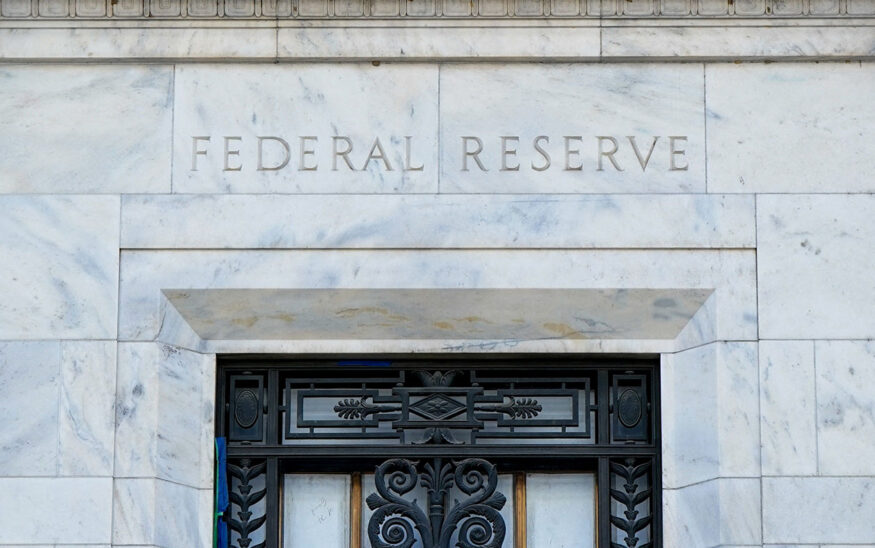
Renovations continue at the Federal Reserve Board building in Washington, D.C., U.S., November 14, 2025. REUTERS/Elizabeth Frantz/File Photo
Renovations continue at the Federal Reserve Board building in Washington, D.C., U.S., November 14, 2025. REUTERS/Elizabeth Frantz/File Photo
Fed leaves rates unchanged, sticks with single cut in 2026 despite higher inflation



Summary:
- The Federal Reserve held interest rates steady at 3.50%-3.75% on March 18.
- Fed projects a single quarter-point rate cut by the end of 2026 despite higher inflation.
- Inflation expected to end 2024 at 2.7%, influenced by rising oil prices amid Middle East tensions.
WASHINGTON, March 18 (Reuters) – The Federal Reserve held interest rates steady on Wednesday and projected higher inflation, steady unemployment and only a single reduction in borrowing costs this year as officials took stock of economic risks from the U.S. and Israeli war with Iran.
New projections from U.S. central bank policymakers showed the Fed’s benchmark overnight interest rate would fall by just a quarter of a percentage point by the end of this year, with no hint of the timing of such a move. That view was unchanged from previous projections and remains out of step with President Donald Trump’s demand for a sharp drop in borrowing costs.
U.S. stocks pared losses slightly after the release of the Fed’s policy statement and projections, with the S&P 500 index last down about 0.6% and the Nasdaq Composite down about 0.5%.
The dollar pared its earlier gains, with the dollar index last up 0.27%. U.S. Treasury yields also pared gains, with the 10-year yield last up at 4.214%.
Inflation, as measured by the Fed’s preferred gauge, was expected to end the year at 2.7%, not far below its current rate and higher than the 2.4% projected in December, possible fallout from the spike in global oil prices that followed the start of the bombing campaign against Iran.
“Implications of developments in the Middle East for the U.S. economy are uncertain,” the Fed said in a policy statement that also noted ongoing stable unemployment.
The new rate and economic projections showed the Fed, for now, largely looking through the oil shock, with policymakers still expecting to lower rates this year and anticipating inflation to be 2.2% by the end of 2027, near the central bank’s 2% target.
Notably, no policymakers saw rates needing to move higher by the end of this year, though one official anticipated a rate increase in 2027.
Economic growth was upgraded slightly, to 2.4% for 2026 versus 2.3% in December, and the projected unemployment rate was unchanged at 4.4%.
Fed Governor Stephen Miran continued his string of dissents, voting against the decision to maintain the policy rate in the current 3.50%-3.75% range in favor of a rate cut.
POLICY STATEMENT LARGELY UNCHANGED
The decision to hold the policy rate steady was widely expected in financial markets, but the projections provide fresh information about how the U.S. central bank is assessing the economic impact of a war that has disrupted global oil markets.
Oil prices have jumped from below $80 a barrel to $108 ahead of the Fed’s policy decision, with U.S. gasoline prices also spiking and new inflation data showing wholesale prices rising faster than expected even before the conflict began.
Other than the reference to the war, the Fed’s new statement was little changed from the one issued at the end of its January 27-28 meeting.
Fed Chair Jerome Powell is scheduled to hold a press conference at 2:30 p.m. EDT (1830 GMT) to elaborate on the outcome of the meeting.
(Reporting by Howard Schneider; Editing by Paul Simao)