Sign In
Upcoming Event
 Free Newsletter

Fed chief Warsh faces hard choice on inflation after bond market’s ‘red flag’

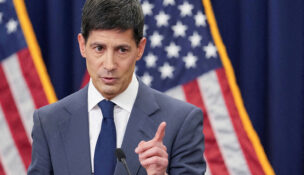
U.S. Federal Reserve Chairman Kevin Warsh holds a press conference following a two-day meeting of the Federal Open Market Committee (FOMC), as the Federal Reserve holds interest rates steady, at the Federal Reserve, in Washington, D.C., U.S. July 29, 2026. REUTERS/Evelyn Hockstein/File Photo
U.S. Federal Reserve Chairman Kevin Warsh holds a press conference following a two-day meeting of the Federal Open Market Committee (FOMC), as the Federal Reserve holds interest rates steady, at the Federal Reserve, in Washington, D.C., U.S. July 29, 2026. REUTERS/Evelyn Hockstein/File Photo
Fed chief Warsh faces hard choice on inflation after bond market’s ‘red flag’



Summary:
- Kevin Warsh signals possible change in inflation framework
- 30-year Treasury yields reach 19-year high above 5.2%
- Three Fed policymakers dissent, urging rate hikes now
July 31 (Reuters) – Federal Reserve Chairman Kevin Warsh’s emphatic declarations on Wednesday that inflation would be brought down without signaling a readiness to raise interest rates triggered a sharp selloff in bonds that may force a hard choice: defying President Donald Trump‘s desire for easier monetary policy or battling a growing cadre of fellow U.S. central bankers determined to tighten it.
Complicating matters was Warsh’s hint that he may try to switch up the Fed’s yardstick for successfully containing inflation, for years defined as a 2% year-over-year rise in the Personal Consumption Expenditures Price Index.
“That’s our number, we’re sticking with it,” Warsh said in a press conference after the end of a two-day policy meeting, before adding, “Who knows, come after next January, what we might say about strategy. I suspect the task forces might have something to add.”
Warsh handpicked 15 outside experts in May to deliver recommendations by the end of 2026 on the Fed’s conduct of monetary policy, including its inflation framework. Warsh said on Wednesday he will check in with them in the next couple of weeks and may share any thoughts that are “ready for prime time” at the Fed’s global central bankers’ conference in Jackson Hole, Wyoming.
Past Fed chiefs have used that late-August meeting to prefigure what the central bank may do at its meetings in September. Warsh has so far stuck to his promise to provide no guidance on the Fed’s likely rate path.
The combination of Warsh’s repeated assertions of the need to tame inflation with no action to move it toward the 2% target and a hint that the goalposts themselves may change helped send 30-year Treasury yields above 5.2% on Wednesday, a 19-year high. They extended their rise on Thursday and Friday.
“That’s almost seen in that building as the markets voting ‘no confidence’ on the Fed and the Fed’s willingness and capacity to bring inflation down,” said Nathan Sheets, the global chief economist at Citigroup.
“He highlighted a problem and gave no strategy for solving it other than, ‘I’m a hawk, trust me,’ and the markets wanted more than that,” said Sheets, who worked at the Fed for 18 years. “I think part of it is if you lean too far into future hikes, then he’s disappointing the White House. And it is a balancing act between Warsh the hawk, which he is, and trying to stay on sides relative to 1600 Pennsylvania Avenue.”
Sheets said Warsh will need to make a choice by September, particularly given what he called the “absolute red flag” of rising long-term bond rates. Short-term Treasuries have twisted the other way, with yields falling as investors pared bets that the Warsh-led Fed will hike rates at all.
THE BREWING STORM
Some of Warsh’s colleagues wanted immediate action.
Three of the Fed’s 12 voting policymakers dissented on Wednesday from the decision to leave the central bank’s benchmark interest rate on hold in the 3.50%-3.75% range.
Each of them issued a statement on Friday explaining why they felt a quarter-percentage-point increase in rates was needed to get inflation back on track to 2%, given a solid labor market and rising price pressures.
“Without any policy restraint, inflation will likely continue to trend above target until there’s an unanticipated shock,” Dallas Fed President Lorie Logan said in a statement. “The (Fed) cannot count on unanticipated shocks to achieve its goals and can always adjust policy if unanticipated shocks occur.”
In a separate statement, Minneapolis Fed President Neel Kashkari said “A potential series of small policy moves would be better than waiting.”
“Now is the time,” Cleveland Fed President Beth Hammack wrote in a statement released by her regional Fed bank.
Others who voted with Warsh on Wednesday to keep rates on hold, including Fed Governors Christopher Waller and Lisa Cook, have said they too may call for rate hikes if they don’t see improvement in inflation soon.
The U.S. Bureau of Economic Analysis reported on Thursday that PCE inflation eased in June to 3.7% from 4.1% in May, and underlying core inflation was up 3.3% last month after advancing 3.4% in May.
The slight improvement had been widely anticipated after the release of other inflation data earlier this month, and policymakers have said they are worried about renewed upward price pressures due to the ongoing Middle East conflict and surging investment in technology related to artificial intelligence.
Business spending on equipment increased at a 15.2% pace in the second quarter, the BEA said in a separate report on Thursday, marking a second straight quarter of double-digit growth.
Tim Duy, chief U.S. economist at SGH Macro Advisors, said members of the Fed’s Board of Governors had “put Warsh on notice they intend to push for a hike in September if inflation does not meaningfully ease over the summer.”
“If Warsh is indeed a dove in hawk’s clothing, he will not have as much support on the board to hold rates steady again in the face of persistently high inflation,” Duy wrote in a note.
Trump so far has refrained from attacking Warsh for not delivering lower rates, instead blaming the new Fed chief’s fellow board members.
(Reporting by Ann Saphir and Michael S. Derby; Editing by Paul Simao)
t