Sign In
Upcoming Event
 Free Newsletter

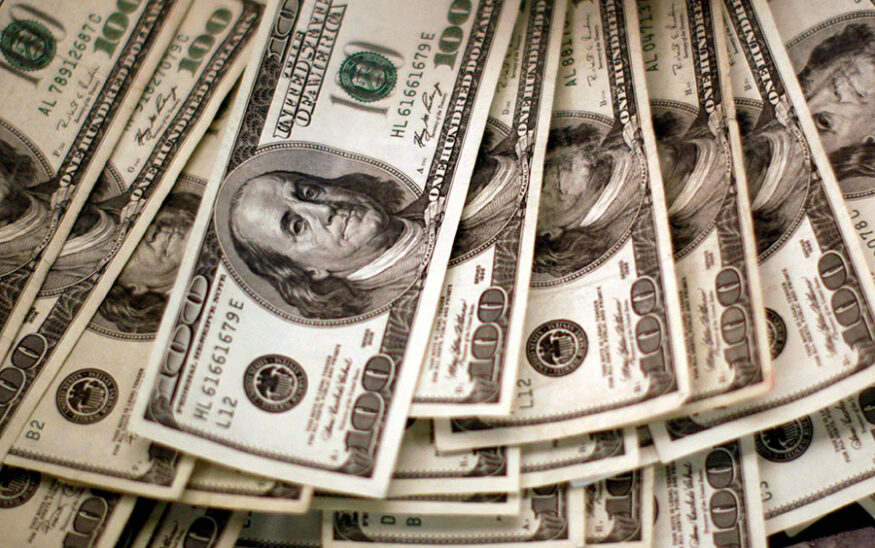
FILE PHOTO: Four thousand U.S. dollars are counted out by a banker counting currency at a bank in Westminster, Colorado November 3, 2009. REUTERS/Rick Wilking/File Photo
FILE PHOTO: Four thousand U.S. dollars are counted out by a banker counting currency at a bank in Westminster, Colorado November 3, 2009. REUTERS/Rick Wilking/File Photo
Dollar climbs to start 2026 after biggest annual drop in eight years



Summary
- U.S. dollar opens 2026 higher after a weak performance last year
- Investors await U.S. labor market data to assess interest rate outlook
- Concerns linger over Fed independence, fiscal deficits and trade risks
- Yen remains under pressure as BOJ rate hikes fail to boost currency
LONDON, Jan 2 (Reuters) – The U.S. dollar kicked off 2026 on a stronger note on Friday after struggling against most currencies last year, as traders awaited a flurry of U.S. economic data next week, including several reports on the labor market, to gauge the path of interest rates.
A narrowing interest rate difference between the U.S. and other economies helped fuel sharp gains against the dollar for most major currencies, with the exception of the Japanese yen.
Worries about the U.S. fiscal deficit, a global trade war and concern about Federal Reserve independence took a toll on the greenback, and those issues are likely to linger into 2026.
Economic data due next week includes a host of reports on the labor market, culminating in the government payrolls report on Friday, which should provide insight as to where the Fed’s policy rate might move.
“Market participants could remain cautious ahead of a dense calendar of U.S. macroeconomic releases next week that could shape expectations for both the dollar and interest rates into 2026,” Joseph Dahrieh, Managing Principal at Tickmill, said in a note.
The dollar index, which measures the greenback against a basket of currencies, rose 0.12% to 98.37, with the euro down 0.11% at $1.1732.
Euro zone manufacturing activity fell in December to its weakest in nine months, a survey showed. The currency surged more than 13% last year, its biggest annual rise since 2017.
Sterling weakened 0.04% to $1.3465 following a 7.7% increase in 2025, also its biggest yearly jump since 2017.
Markets in Japan and China were closed on Friday, leading to thin trading volume.
Investors will also be eyeing who U.S. President Donald Trump chooses to be the next Fed chair as the term of current head Jerome Powell ends in May.
Trump flagged that he would make his Fed chair pick this month, and many market participants expect Trump’s pick to be a proponent of more rate cuts, as the president has repeatedly criticized Powell and the Fed for not reducing borrowing costs at a faster pace and a larger magnitude.
Traders are fully pricing in two cuts this year compared to one projected by a currently divided Fed board.
“We expect that concerns around central bank independence will extend into 2026, and see the upcoming change in Fed leadership as one of several reasons why risks around our Fed funds rate forecast skew dovish,” Goldman strategists said in a note to clients.
YEN REMAINS THE EXCEPTION
The Japanese yen weakened 0.11% against the greenback to 156.84 per dollar after rising less than 1% against the greenback in 2025. It remained close to a 10-month low of 157.89 touched in November that drew policymaker attention and raised expectations for a possible intervention by the Bank of Japan (BOJ).
The BOJ hiked interest rates twice last year but that did little to support the yen performance as investors appeared to be looking for a more aggressive pace.
Markets are not pricing in more than a 50% chance of another BOJ rate hike until July, according to LSEG data.
(Reporting by Chuck Mikolajczak; additional reporting by Ankur Banerjee in Singapore and Samuel Indyk in London; Editing by Christopher Cushing, Philippa Fletcher, Gareth Jones and Franklin Paul)
T