Sign In
Upcoming Event
 Free Newsletter

Boar’s Head reopens Jarratt plant tied to deadly listeria outbreak
Company says it has added safety measures
Josh Janney //February 5, 2026//
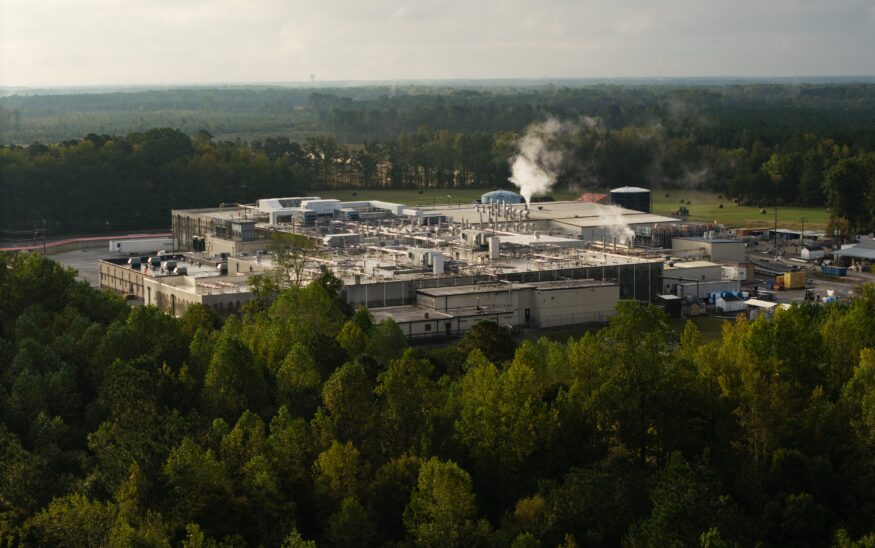
The Boar’s Head plant in Jarratt on September 18, 2025. The company reopened its Jarratt meat plant Monday. Photo courtesy Boar's Head Provisions
The Boar’s Head plant in Jarratt on September 18, 2025. The company reopened its Jarratt meat plant Monday. Photo courtesy Boar's Head Provisions
Boar’s Head reopens Jarratt plant tied to deadly listeria outbreak
Company says it has added safety measures
Josh Janney //February 5, 2026//



SUMMARY:
Deli meat company Boar’s Head Provisions reopened its Jarratt meat plant Monday, roughly a year and a half after closing due to a listeria outbreak that claimed 10 lives.
In July 2024, the company voluntarily recalled 7 million pounds of cold cuts products after testing confirmed listeria contamination that originated at the Jarrett facility. At the end of the month, the U.S. Department of Agriculture’s Food Safety and Inspection Service notified the company that it would halt production of ready-to-eat meats at the plant until Boar’s Head submitted corrective action plans.
In November 2024, the Centers for Disease Control and Prevention reported cases across 19 states tied to the listeria outbreak, including 60 hospitalizations and 10 deaths.
In September 2024, Boar’s Head announced it would indefinitely close the plant, which had already been out of operation since July. About 500 union workers had been employed there.
However, the Jarratt plant reopened this week, after what Boar’s Head called substantial facility enhancements and the implementation of enhanced product manufacturing protocols to improve safety.
Last year, Boar’s Head agreed to pay $3.1 million in a settlement to a class action lawsuit accusing the company of “deceptive and misleading business practices” regarding the manufacturing, marketing and sale of Boar’s Head brand products. The lawsuit accused the company of improperly, deceptively and misleadingly labeling and marketing its products by failing to disclose to consumers that the products were contaminated with listeria monocytogenes.
However, Boar’s Head said over the past year the Jarratt facility underwent “extensive renovation” to ensure safety and quality in the food preparation process. The company also said it is implementing more stringent requirements across all its facilities.
“Since I joined Boar’s Head in May 2025, it has been clear to me from day one that Boar’s Head is a company that puts food safety and quality first,” Chief Food Safety Officer Natalie Dyenson said in a statement. “The extensive enhancements and stringent protocols implemented at the Jarratt facility, as well as the advancements and the actions we’ve taken across our organization, ensure we uphold rigorous safety standards. We are committed to building on our more than 120-year history of delivering products that consumers love and can eat with confidence.”
Problems at other plants
However, in January 2025, the USDA released inspection records that revealed unsanitary conditions at several Boar’s Head deli meat plants, including one in Petersburg. According to news reports, there were similar problems at the plants as there were in Jarratt, including equipment covered in meat scraps.
The Petersburg facility was cited for noncompliance multiple times last year by the USDA, most recently in August 2025. An inspector wrote that “the establishment continues to fail to prevent product from becoming adulterated or contaminated.”
In July 2025, the USDA notified Boar’s Head that the Jarratt plant’s suspension was “held in abeyance,” meaning that it would be allowed to reopen but must submit to inspections and verification activities by USDA’s Food Safety and Inspection Service. The government agency noted that failure to comply with the Federal Meat Inspection Act could lead to “further enforcement action.”
Boar’s Head said the Jarratt facility will operate under the United States Department of Agriculture’s Alternative 2 listeria control program, which uses an antimicrobial process to reduce or suppress listeria and reduce contamination risk. The company also said it has enhanced listeria sampling, invested in lab testing and analysis technologies, strengthened sanitation protocol and increased employee training on matters of food safety.
The company said it was “excited to bring employment opportunities back to the region” due to the facility reopening but did not say how many positions it would hire. The company did not immediately respond to requests for further comment.