Sign In
Upcoming Event
 Free Newsletter

After bank mergers comes ‘big work’ of integration
Atlantic Union, TowneBank and Capital One all acquired banks in 2025
Kate Andrews //February 1, 2026//

Atlantic Union Bank Chief Human Resources Officer Clare Miller onboarded hundreds of former Sandy Spring Bank employees in spring 2025 after Atlantic Union closed the $1.3 billion acquisition. Photo by Jay Paul
Atlantic Union Bank Chief Human Resources Officer Clare Miller onboarded hundreds of former Sandy Spring Bank employees in spring 2025 after Atlantic Union closed the $1.3 billion acquisition. Photo by Jay Paul
After bank mergers comes ‘big work’ of integration
Atlantic Union, TowneBank and Capital One all acquired banks in 2025
Kate Andrews //February 1, 2026//



Summary
- Experts expect a new wave of bank mergers under looser Trump-era antitrust policies
- Virginia banks TowneBank and Atlantic Union led major acquisitions in 2025
- Converting customer data and IT systems is the most complex part of mergers
- Credit unions are also consolidating amid growing competition
If your bank or credit union hasn’t been purchased by another financial institution lately, it may be coming soon — or maybe your bank is one of the buyers.
Experts predict more mergers and acquisitions under the Trump administration’s looser constraints on antitrust enforcement, compared to the Biden-era Federal Trade Commission, whose scrutiny led to the 2023 collapse of Canada-based TD Bank’s proposed $13.4 billion merger with First Horizon Bank.
In August 2025, President Donald Trump reversed former President Joe Biden’s executive order that promoted more federal scrutiny of mergers, and analysts expect more merger activity among banks of all sizes to follow in the next year to 18 months.
“There’s likely to be a wave of mergers over the next few months, and most of that’s being driven by bank stocks being up in price,” explains TowneBank Executive Chairman Bob Aston. “You’ve also got a regulatory environment [where] if you can reach a deal with a potential seller, you can get the deal approved.”
In Virginia, Suffolk-headquartered TowneBank and Henrico County-based Atlantic Union Bank have had a busy year acquiring smaller community banks, as well as completing months of work in converting customers’ accounts and internal software systems.
Typically, it takes about six months after a deal’s close for community banks to reach “conversion weekend,” when they flip the switch for the old bank’s customers’ accounts to move to the new bank’s system. Preparations include IT updates, hardware replacements and scheduling the bank’s software vendors to move data to combined systems.
“There’s what we call a legal close, where we become the owner of that particular entity,” Aston explains. “But the big work really comes when it’s time to do the operational integration, which is tying all the technology together and bringing everything into our systems here from whatever provider they’re using for all of their IT needs. That’s the work part of the deal.”
Converting data
Matt Linderman, Atlantic Union’s chief information officer, led his bank’s six-month IT conversion process after its $1.3 billion purchase of Sandy Spring Bancorp in April 2025. Some parts of the integration were easier than others — both banks used Salesforce for customer management, for example, so they remained on that system.
But, he says, there were other areas that meant moving “well over tens of millions” of individual bits of data from Sandy Spring’s systems to Atlantic Union’s systems, ensuring former Sandy Spring customers’ savings, credit and checking accounts remained accurate.
To manage this project, Atlantic Union staged two “mock events, where we do the complete conversion of data in a nonproduction environment, just like we would be doing it on the conversion weekend,” Linderman says, explaining that these practice runs are to make sure everything runs smoothly. “It’s fairly intensive. We have two full mock events before our actual conversion, which we found to be tremendously helpful.”
For the November 2025 conversion of Sandy Spring, “we had 50-plus branches that we were bringing into our footprint that all had to be converted to our technology,” Linderman adds. “We looked at … the things we can do well in advance of conversion. Can we upgrade networks? Can we replace hardware like desktop computers? That’s exactly what we did. So, there was no kind of ‘big bang.’”
Also during the pre-conversion period, Atlantic Union onboarded Sandy Spring’s employees, says Chief Human Resources Officer Clare Miller. While the bank has onboarding tools and processes it uses for any new employee, with the acquisition of Sandy Spring, “we grew our organization by about 50%,” Miller notes — all at once.
“We had a dedicated resource in HR,” a manager specifically in charge of onboarding Sandy Spring employees, Miller says.
Also, Atlantic Union tapped a few of its employees and legacy Sandy Spring employees as “culture champions” who could help manage day-to-day questions about new internal systems and other queries from employees. Starting the day after the April 2025 closing of the acquisition, “we provided office hours that you could call into and ask a myriad of questions,” Miller says, “like, how do I review my first paycheck in the new system, or log timekeeping?”
For about six weeks, Atlantic Union’s HR department held weekly training sessions that taught new employees how to navigate the bank’s systems and had a Microsoft Teams channel for employees to ask questions.
“We got overwhelmingly positive feedback, and some of it was around just being very intentional,” Miller says.
Atlantic Union’s approach to conversion also led the bank to consider how to handle customer call volume, which is typically much higher than usual in the days after a conversion.
The old bank’s customers receive notification of the coming changes via email and physical mail, but they often have questions about setting up remote access to their accounts or signing in to check their bank balances.
Most banks hire an outside call center to field post-conversion calls, but Atlantic Union executives say outsourcing wasn’t working very well for them.
“We had a conversion almost two years ago,” Atlantic Union Bank President and Chief Operating Officer Maria Tedesco says, “and we did what every bank did: We hired a third-party call center to help support. We monitored some of their calls, and we realized after that conversion, they’re not our own people. They’re not as passionate as we are.”
Atlantic Union’s head of consumer banking, Shawn O’Brien, suggested that the bank ask its existing employees to answer calls, a project that Tedesco says led to great success during the Sandy Spring conversion.
“We trained 300 teammates who don’t normally answer calls,” says Tedesco, who underwent the training herself.
“We didn’t get the volume [of calls] we assumed, but we had this incredible experience, and we got great marks from our customers.”
Miller says that part of the appeal of serving as an in-house call center was that employees could work from home and receive cash bonuses for signing up. Ultimately, call volume was lower than expected, so the volunteers were able to return to their regular work after a week.
A time for merging
Banks aren’t the only financial institutions going through mergers. Virginia Credit Union and Roanoke-based Member One closed on their merger in August 2024, and full integration is expected to be complete by April, VACU officials say.
And in January 2025, Fairfax County-based Apple Federal Credit Union merged with Fairfax’s NextMark Credit Union, creating a $5 billion asset institution. Jeff Long, Apple’s chief lending officer, proudly notes that their conversion took place in February 2025, an unusually quick transition.
“In the case of NextMark, we had a lot of overlap,” Long says. “We were kind of in the same locations. They served Fairfax County government employees. We served Fairfax County school employees.”
Also, Apple employees started working on data conversion about six months ahead of the merger, Long notes. “We put a lot of other things on pause and made the merger our No. 1 project. Every department was involved. I think it was a good group effort where everybody was doing the same thing for the common cause.”
When it came to the actual conversion weekend, between 125 and 150 employees were stationed at Apple’s headquarters after 5 p.m. Friday and into Saturday morning, making sure everything merged correctly.
“Branches are going to be closed, the systems are going to come down, and you do your normal processes to end the day, and then you merge the data calendar and then bring it back up again on Saturday morning,” Long explains.
“And then you work the rest of the weekend to make sure that everything is the way that you wanted it to be.”
To keep spirits up, Apple brought in doughnuts and pizza, as well as “lots of energy drinks and coffee,” Long says. “Because everybody’s giving up their weekend.”
Beyond having Apple employees on hand for the conversion, Long notes that scheduling the credit union’s software vendors to move data in time for the conversion weekend “was the big variable. There are dozens of software vendors involved, so you have to have them all in agreement and all in alignment to be able to get everything done that weekend.”
That was the same for Atlantic Union, which consulted with its vendors during the two mock events leading up to conversion in November 2025. “After the first one, all the learnings are fed back into the vendor, incorporated and then [used] in mock No. 2,” Linderman says. “These conversions are clearly very much about the data.”
For TowneBank, which announced its purchases of Village Bank, Old Point National Bank and Dogwood State Bank in 2025, full integration is taking a bit longer. In the case of North Carolina-based Dogwood, conversion is expected to be completed in November, about 10 months after the acquisition closed in January, notes Billy Foster, TowneBank’s president and CEO.
“We would like to be about six months apart on those two dates,” Foster says, “but we’re also doing a conversion of the Old Point acquisition, so that’s why the time period between close and conversion in this case is probably a little longer. We try to space them out so that we can do them well and do them properly.”
Foster and Aston, who together have a century of experience in banking, say that integration is a much more complicated process now than even 20 years ago.
“You’ve got the core system that runs the bank, the system that runs the mortgage company, the system for online banking, the software you use for bill pay,” Foster says. “All the mobile applications have their own software.”
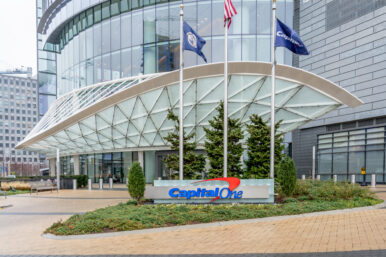
And all of that is for a relatively small number of customers, at least compared with giant banking mergers like Capital One’s $35.3 billion purchase of Discover, which closed in May 2025, creating the sixth largest U.S. bank.
Capital One said at the time of that blockbuster deal’s closing that customers would be notified in advance of conversions or other changes to accounts. In November 2025, Capital One moved debit cards to the Discover network from Mastercard’s platform, prompting complaints from users that Discover cards aren’t accepted as many places as their old cards were, according to reporting by The Wall Street Journal. Capital One didn’t respond to a request for an interview for this article.
“We’re a community bank,” Foster says. “We are a $20 billion bank now. We have one or two $3 billion banks joining us. I can’t imagine the complexities when a $200 billion bank merges with another $200 billion bank. Those conversions often take two years and come with lots of challenges and issues and cause a lot of disruption for the customers of those banks.”
p