Sign In
Upcoming Event
 Free Newsletter

BAE Systems receives $500M Army contract
Falls Church contractor to produce M109A7 Paladin self-propelled howitzers
Josh Janney //February 25, 2026//
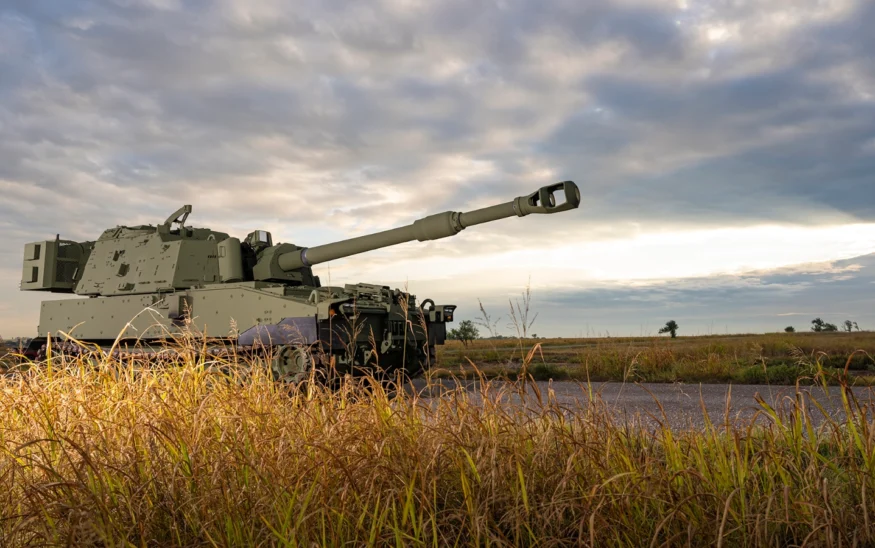
The M109A7 is the latest howitzer in the BAE Systems M109 family of vehicles. Photo courtesy BAE Systems.
The M109A7 is the latest howitzer in the BAE Systems M109 family of vehicles. Photo courtesy BAE Systems.
BAE Systems receives $500M Army contract
Falls Church contractor to produce M109A7 Paladin self-propelled howitzers
Josh Janney //February 25, 2026//



Falls Church-based federal contractor BAE Systems announced Tuesday it received a more than $500 million contract to produce 40 sets of M109A7 Paladin self-propelled howitzers and M992A3 ammunition carriers for the U.S. Army.
The M109A7 is the latest variant in BAE Systems’ M109 howitzer family of vehicles. The system aims to improve survivability, reduce operational costs and sustain combat capability while enabling indirect fire support with greater precision.
The company said the platform integrates advanced technology and a modern architecture, incorporating digital fire control systems known as the “digital backbone.”
“The M109A7 Paladin self-propelled howitzer is designed to provide a significant operational advantage on today’s battlefields and into the future,” Dan Furber, program director for artillery and combat support for BAE Systems’ combat mission systems business, said in a statement. “Its proven performance demonstrates its value on the field, and we’re proud to support the U.S. Army and its allies in leveraging this critical capability.”
The M109A7 is produced in York, Pennsylvania, as well as Elgin, Oklahoma, and Anniston, Alabama.
The contract was awarded in December 2025 and is designed to bolster the Army’s ability to support operational requirements for armored brigade combat teams, especially in challenging terrains or conditions.
Based in Falls Church, Bae Systems is the U.S. arm of British defense giant BAE Systems PLC. The company has approximately 41,000 employees in the United States, the United Kingdom and Sweden. The parent company reported 30.7 billion pounds, or $41.5 billion, for 2025.
o