Sign In
Upcoming Event
 Free Newsletter

Local leaders shape solar’s future
Success for developers depends on public perception
Jared Burden //November 24, 2025//
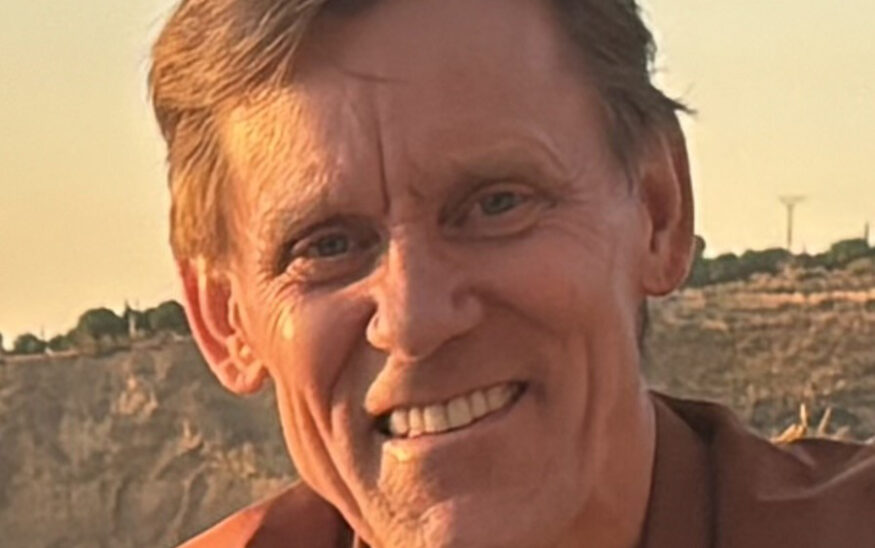
Jared Burden is a co-managing partner of GreeneHurlocker. Photo courtesy Jared Burden
Jared Burden is a co-managing partner of GreeneHurlocker. Photo courtesy Jared Burden
Local leaders shape solar’s future
Success for developers depends on public perception
Jared Burden //November 24, 2025//



While national headlines spotlight federal policy most prominently these days, it seems to me the most critical battleground for solar energy in Virginia is local.
Recent federal legislation is phasing out key tax credits for solar, but as is often the case, necessity has become the mother of invention. Developers are finding new ways to make projects work without relying on Washington. And that shift only heightens the influence of county boards, planning commissions and zoning ordinances — not Congress or the Federal Energy Regulatory Commission — in determining whether solar projects move forward.
We’ve seen it firsthand: Projects with sound engineering and strong economics stall due to local opposition, often because community relationships weren’t built early. Developers must recognize that success depends on public perception as much as project design.
Here are some suggestions for those working to bring solar to the commonwealth:
1. Outreach isn’t optional
Local opposition often tips the scales. A coordinated group of residents opposing a solar project can dominate a public hearing — especially when no one speaks in favor other than the landowner who is selling or leasing to the developer.
One client who is a solar developer defused potential opposition to a large solar project by visiting every adjoining landowner and explaining the project personally. Developers know how to explain setbacks, buffers and screening requirements, now standard in many ordinances. Education and empathy go a long way. Many residents are surprised to learn how little of a project will be visible from their property or how many protections are already in place. With energy storage, neighbors are often surprised by how relatively small these facilities are compared to even a modest solar project.
2. Collaborate
County supervisors and staff are navigating complex decisions, often with limited resources. Many are trying to balance state laws, local comprehensive plans and community sentiment, while also fielding misinformation and pressure from both sides.
Developers should approach these officials as collaborators. Be clear, patient and respectful. Provide technical explanations in plain language.
When developers show respect for the process and serve as a resource, they often find more openness and engagement in return.
3. Influence policy early
Local solar ordinances are being written — and rewritten. When developers don’t engage, policies can include restrictive caps, arbitrary megawatt limits or acreage constraints that function as de facto bans. By the time a policy is finalized, it can be hard to unwind.
That’s why it’s essential to participate early. Share model ordinances. Offer data. Flag red flags. Even counties that want to support solar sometimes enact problematic rules because they didn’t get good input when it counted.
It’s encouraging that some counties are proactively seeking industry input in writing ordinances to regulate the new (to them) technology of electricity storage.
4. Separate solar from data centers
Solar is increasingly caught up in backlash against data centers, which are seen as energy-hungry developments with few local benefits. Don’t miss an opportunity to set the record straight.
Solar doesn’t create the demand crisis — it helps solve it. Solar can be up and running in a fraction of the time it takes to build a gas-powered power plant. It also reduces dependence on long-distance transmission and eases local bottlenecks. Positioning solar as part of an all-of-the-above strategy for energy reliability can help reframe the conversation in the eyes of skeptical local audiences.
Jared Burden is a co-managing partner of GreeneHurlocker, a Virginia-based energy and general business law firm. He frequently advises developers of utility-scale and distributed generation renewable energy projects in land use and other matters.
P