Sign In
Upcoming Event
 Free Newsletter

Virginia’s congressional redistricting election cost more than $5M
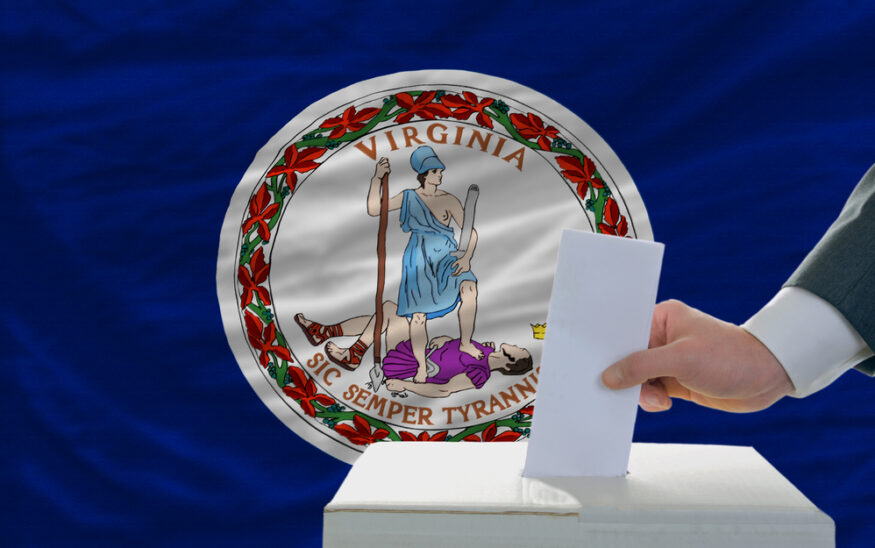
Depositphotos
Depositphotos
Virginia’s congressional redistricting election cost more than $5M



Summary:
- Virginia General Assembly appropriated $5 million for election
- Petersburg spent at least $30,000 on referendum costs
- Supreme Court of Virginia declared election results null
By declaring the results of the April 21 congressional redistricting referendum null and void, the Supreme Court of Virginia also voided a multi-million-dollar investment by state and local electoral officials into administering the special election.
The 2026 Virginia General Assembly appropriated $5 million for the election in legislation shepherded by Virginia Democrats who control both the Senate and the House of Delegates. It covered election administration, early voting infrastructure and overall voter education.
But the final price tag is likely to be higher than that because it does not include the costs incurred by the local electoral boards that vary according to the size of the locality. And each locality had its own unique costs.
In Petersburg, General Registrar Dawn Wilmoth estimated her office spent a minimum of $30,000 on the referendum. That included manning both the 45-day early voting period at the registrar’s office and day-of voting at the seven precincts. But it also included logistics that normally fly under the public’s radar, such as printing the ballots, programming and testing the voting machines and hiring movers for all the precinct equipment.
Waynesboro Registrar Lisa Jeffers estimated the cost of the election for the city was about $20,000, not including staff salaries, and in Staunton, Registrar Christi Linhoss also estimated the election cost the city about $20,000.
“There are always expenses behind the scenes,” Wilmoth said. She added it is important to note that turnout does not govern the costs because each office prepares for a 100% voter turnout regardless of the political emotional impact of the election.
Some of Virginia’s larger precincts had to spring for extra security in some cases at polling places where tensions had been reported.
WIlmoth said she expects to present an itemized report of Petersburg’s expenditures to the state next week.
Speaking about the court decision, Wilmoth said she fears that it could dampen future voter enthusiasm. However, in the end, she said, the court based its order on the law, not politics.
“I worry that it will keep people from wanting to vote in the future because they think their vote will not actually count,” she said. “It’s important for people to understand why it was overturned because the court felt the protocols were not followed, not just that the election was overturned. It should not be made political. The election laws were put in place to protect all citizens and to adhere to the legal process.”
Statewide, political leaders react predictably across Virginia
As expected, reaction to the decision was partisan, with Democrats decrying it and Republicans celebrating it.
“Today’s ruling establishes once again that the Constitution of Virginia means what it says. The rule of law requires that Virginians have an opportunity to review a constitutional amendment before they vote in a meaningful way,” a statement from Virginia House Republicans said. “You cannot violate the constitution to amend the constitution.”
Attorney General Jay Jones said in a statement that his office “is carefully reviewing this unprecedented order and we are evaluating every legal pathway forward to defend the will of the people and protect the integrity of Virginia’s elections.” But while he hinted at an appeal, other Democrats, including Virginia’s governor, seemed resigned to the outcome.
“More than three million Virginians cast their ballots in Virginia’s redistricting referendum, and the majority of Virginia voters voted to push back against a president who said he is ‘entitled’ to more Republican seats in Congress with a temporary and responsive referendum. They made their voices heard,” Gov. Abigail Spanberger, who signed the legislation creating the referendum, said in a statement released by her office. “I am disappointed by the Supreme Court of Virginia’s ruling, but my focus as governor will be on ensuring that all voters have the information necessary to make their voices heard this November in the midterm elections because in those elections we, the voters, will have the final say.”
Added Virginia House Speaker Don Scott Jr., D-Portsmouth, “Three million people voted in a free and fair election. We gave this decision to the voters – exactly where it belongs – and they spoke loud and clear. They voted ‘yes’ because they wanted to fight back against the Trump power grab. That truth doesn’t change because of a court ruling. This was always about more than one election – it was about whether the voices of the people matter. And no decision can erase what Virginians made clear at the ballot box.”
Rep. Jennifer McClellan, D-Virginia, whose district would have widened a bit under the new map, called the ruling “a disappointment.” She said it came as GOP-led Southern states “rush to dilute Black votes and erase Black representation in Congress following the gutting of the Voting Rights Act in Callais v. Louisiana.
“Today’s ruling is a disappointment to the 1.6 million Virginians who cast their ballot to level the playing field in response to Donald Trump’s attempts to win the House through rigged maps nationwide. This decision comes as GOP-led Southern states rush to dilute Black votes and erase Black representation in Congress following the gutting of the Voting Rights Act” in a decision from the U.S. Supreme Court earlier this month.
“We are at a critical moment for our democracy,” McClellan said in a statement released by her office. “Donald Trump knows Republicans cannot win the midterm elections on the merits of their policies, so he seeks to rig the election through partisan gerrymandering. We cannot allow him to silence our voices.
“We are witnessing the largest backlash to Black political, economic and social power since the post-Reconstruction era, when Jim Crow tactics led to nearly a century between the first Black representatives in Congress and state legislatures and the second generation in the 1960s. We cannot let that history repeat itself.”
Not the first time referendum voided
Friday’s opinion was not the first time the Virginia Supreme Court struck down an election referendum.
The last time it happened was in 1958, when the court struck down a referendum in Arlington County that tried to limit who could vote on bond elections
The 1958 decision, Carlisle vs. Hassan, voided a local Arlington County referendum that tried to limit who could vote in bond elections. That unanimous ruling said that Arlington’s vote was unconstitutional because it limited voter participation to only property owners.
It differs from Friday’s ruling because the Arlington decision was based on substance, not the voting procedure. But it did show precedent that the court can strike down a referendum election even when the majority of voters approved it.
Lyra Bordelon from The News Leader in Staunton contributed to this story.
Bill Atkinson (he/him/his) has won numerous awards during his 40-year journalism career. A Petersburg native, Bill is a 1984 graduate of Virginia Commonwealth University in Richmond with a degree in mass communications. He specializes in coverage of breaking news, crime, government, and local/state/national politics. He is an avid history buff and a lifelong Washington Commanders fan. Reach him at [email protected] with news tips and story suggestions.
This article originally appeared on The Progress-Index: Virginia’s congressional redistricting election cost more than $5M
Reporting by Bill Atkinson, Petersburg Progress-Index / The Progress-Index
USA TODAY Network via Reuters Connect
a