Sign In
Upcoming Event
 Free Newsletter

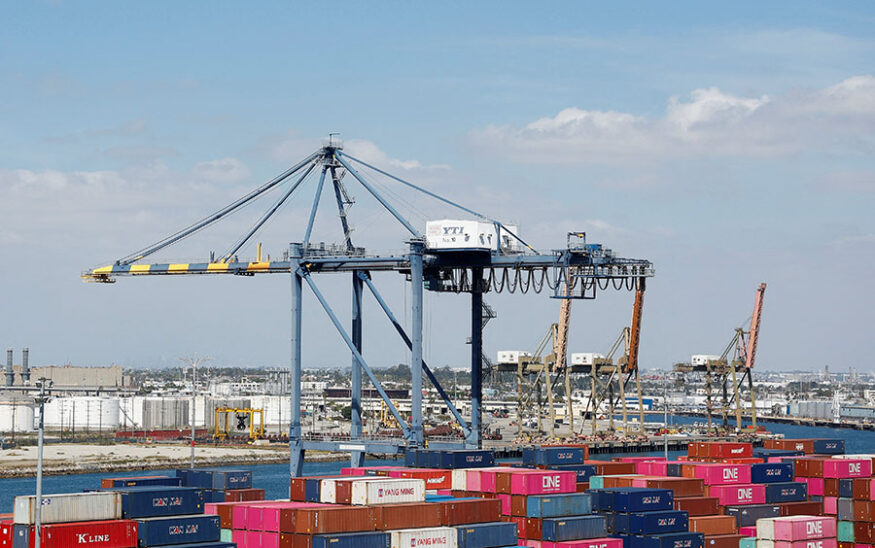
Shipping containers are stacked at a terminal at the port of Los Angeles in Long Beach, California, U.S., March 10, 2026. REUTERS/Caroline Brehman
Shipping containers are stacked at a terminal at the port of Los Angeles in Long Beach, California, U.S., March 10, 2026. REUTERS/Caroline Brehman
US waives shipping regulation to ease fuel, fertilizer deliveries



WASHINGTON, March 18 (Reuters) – The Trump administration on Wednesday announced a 60-day waiver of Jones Act shipping regulations to help ease deliveries of fuel and fertilizer to combat rising prices and supply disruptions caused by the conflict in Iran.
“President Trump’s decision to issue a 60-day Jones Act waiver is just another step to mitigate the short-term disruptions to the oil market as the U.S. military continues meeting the objectives of Operation Epic Fury,” White House spokeswoman Karoline Leavitt said.
“This action will allow vital resources like oil, natural gas, fertilizer, and coal to flow freely to U.S. ports for sixty days, and the Administration remains committed to continuing to strengthen our critical supply chains,” she said.
High energy prices carry significant political risks for President Donald Trump and fellow Republicans, who have long argued that their policies would keep fuel affordable for American consumers.
U.S. gasoline prices have surged since the start of U.S. and Israeli attacks on Iran on February 28 as the conflict effectively closes the Strait of Hormuz, the outlet for around a fifth of global oil and liquefied natural gas supplies.
The conflict has also disrupted fertilizer supplies, which is a major concern for U.S. agricultural interests.
Under the Jones Act, goods shipped between U.S. ports must be carried on vessels that are U.S.-built, U.S.-flagged and mostly U.S.-owned.
The requirement sharply limits the number of tankers available for domestic shipments, but is supported by maritime industry unions.
Waiving the rule temporarily would allow foreign ships to carry cargoes between U.S. ports, potentially lowering shipping costs and speeding deliveries. Analysts have said, however, that the impact on pump prices will likely be minimal.
(Reporting by Jarrett Renshaw, Gram Slattery and Jonathan Saul, editing by Richard Valdmanis and Chizu Nomiyama)
s