Sign In
Upcoming Event
 Free Newsletter

Oil turns negative as large US crude stock build outshines supply concerns
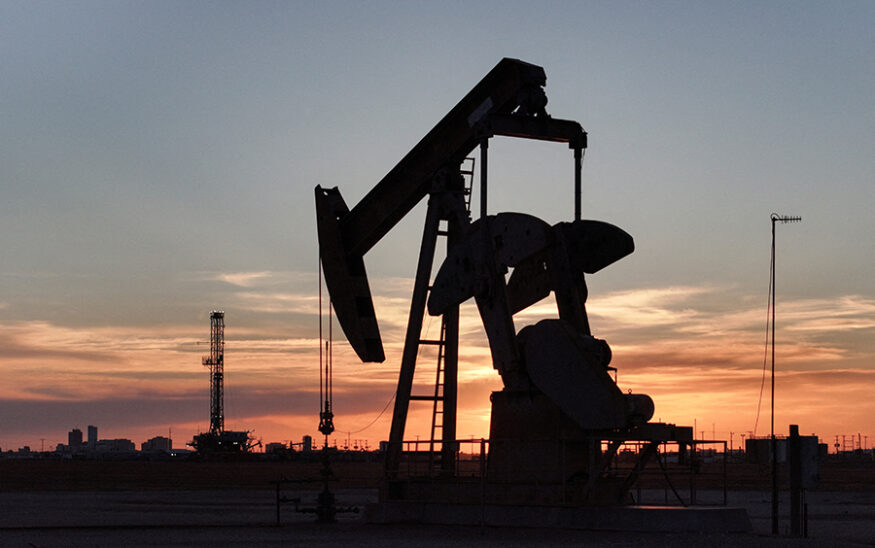
A drone view of a pump jack and drilling rig south of Midland, Texas, U.S. June 11, 2025. REUTERS/Eli Hartman/File Photo
A drone view of a pump jack and drilling rig south of Midland, Texas, U.S. June 11, 2025. REUTERS/Eli Hartman/File Photo
Oil turns negative as large US crude stock build outshines supply concerns



Summary:
- US crude inventories rose by 16 million barrels last week, exceeding analyst expectations.
- Geopolitical tensions between the US and Iran continue to influence oil prices.
- OPEC+ plans to consider raising oil output by 137,000 barrels per day in April.
HOUSTON, Feb 25 (Reuters) – Oil prices slipped into negative territory on Wednesday as a much larger-than-expected U.S. crude stock build outweighed the threat to oil supply from potential military conflict between the U.S. and Iran.
Brent futures were down 12 cents at $70.65 a barrel at 11:16 a.m. ET (1607 GMT), while WTI futures were down 26 cents at $65.37.
U.S. crude inventories rose by 16 million barrels last week as refinery utilization fell and imports increased, the Energy Information Administration said on Wednesday. That compared with analysts’ expectations in a Reuters poll for a 1.5-million-barrel rise.
However, the EIA’s adjustment number, which totals unaccounted for changes in crude stocks, hit a record last week at 2.7 million barrels per day.
“A bearish (EIA) report with a large crude build… the prices impact was however limited, as the oil market remains more influenced by other factors at present, such as geopolitical tensions in the Middle East,” said Giovanni Staunovo, commodity analyst at UBS.
Brent prices had reached their highest since July 31 on Friday while WTI hit its highest since August 4 on Monday, as the U.S. positioned military forces in the Middle East to try to compel Iran to negotiate an end to its nuclear and ballistic missile programme.
An extended conflict could disrupt supplies from Iran, the third-biggest crude producer in the Organization of the Petroleum Exporting Countries, and other countries in the key Middle East producing region.
Supporting oil prices, U.S. President Donald Trump briefly laid out his case for a possible attack on Iran in his State of the Union speech on Tuesday, saying he would not allow a country he described as the world’s biggest sponsor of terrorism to have a nuclear weapon.
U.S. envoy Steve Witkoff and Jared Kushner are due to meet an Iranian delegation for a third round of talks on Thursday in Geneva.
Iranian Foreign Minister Abbas Araqchi said on Tuesday that a deal with the U.S. was “within reach, but only if diplomacy is given priority”.
OPEC+ will likely consider raising its oil output by 137,000 barrels per day for April to end a three-month pause in production increases, three sources with knowledge of OPEC+ thinking said, as the group prepares for peak summer demand and tensions between the U.S. and OPEC member Iran boost prices.
Eight OPEC+ producers – Saudi Arabia, Russia, the United Arab Emirates, Kazakhstan, Kuwait, Iraq, Algeria and Oman – meet on March 1.
In a separate development, top OPEC+ producer Saudi Arabia has activated a plan for a short-term oil output and export surge in case a U.S. strike on Iran disrupts oil flows, two sources familiar with the Saudi plan told Reuters.
Tariff uncertainty also further worried investors. Trump’s temporary global tariff of 10% came into effect on Tuesday after the Supreme Court’s sweeping ruling last week. He later said the levy would be 15%, but it was unclear when and if it would apply.
The U.S. tariff rate for some countries will rise to 15% or higher from the newly imposed 10%, U.S. Trade Representative Jamieson Greer said on Wednesday, without naming any specific trading partners or giving further details.
(Reporting by Stephanie Kelly in London, Katya Golubkova in Tokyo and Jeslyn Lerh in Singapore. Editing by Mark Potter, David Goodman, Alexandra Hudson)
C