Sign In
Upcoming Event
 Free Newsletter

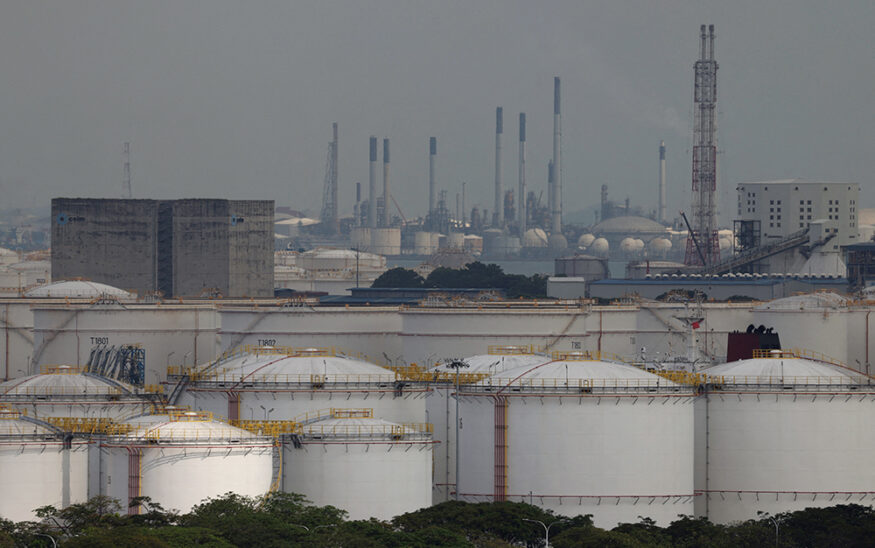
Storage tanks and oil refineries in Jurong Island, Singapore, March 24, 2026. REUTERS/Edgar Su/File Photo
Storage tanks and oil refineries in Jurong Island, Singapore, March 24, 2026. REUTERS/Edgar Su/File Photo
Oil settles up on US-Iran strikes; cautious hopes for shipping cap gains



HOUSTON, June 29 (Reuters) – Oil prices settled up more than 1% on Monday after attacks by the U.S. and Iran underscored the fragility of their interim peace deal, while cautious hopes of a continued recovery in energy shipping through the Strait of Hormuz limited gains.
Iranian and U.S. technical teams working on the implementation of an interim peace deal are expected to meet in Doha in the coming days, a source told Reuters on Monday, after the tit-for-tat weekend strikes threatened to derail the accord.
Brent crude futures settled up $1.16, or 1.61%, at $73.15 a barrel. U.S. West Texas Intermediate crude gained $1.52, or 2.2%, to $70.75.
Brent crude fell 10.6% last week in a third consecutive weekly decline after crude shipments through the strait rose to their highest since the U.S.-Israeli war on Iran began in late February.
Iranian and Omani experts will start talks on redefining transit paths through the Strait of Hormuz in the coming days, Iranian Deputy Foreign Minister Kazem Gharibabadi told state TV on Monday, adding that his country will try to obstruct vessels outside of defined paths.
Outbound Persian Gulf crude exports are quickly rebounding to at least 75% of pre-war levels, Gelber & Associates analysts said in a note on Monday.
However, analysts cautioned that traffic through the strait is far from being fully recovered, helping keep prices somewhat elevated.
“I think that reality is starting to sink in. Not every barrel is going to come out the Gulf in the next week or two, you can’t really jam as many barrels through there as possible to pre-war levels. As long as the situation is risky, anyone owning a boat runs the risk of having that boat attacked as it heads through the strait,” said Bob Yawger, director of energy futures at Mizuho.
Mines in the waterway as well as insurance companies not yet being fully on board are also factors weighing on traffic through the strait, according to Yawger.
Meanwhile, Middle East producers are pushing ahead with loading oil and LNG despite fresh ship attacks in the Strait of Hormuz and renewed strikes between the U.S. and Iran in recent days, shipping data showed.
Saudi oil giant Aramco resumed crude oil loadings on Friday at its Ras Tanura terminal, west of the Strait of Hormuz, after they were halted for nearly four months.
Loadings continued even after a helicopter belonging to the company crashed on Sunday at Ras Tanura, killing 14 nationals. The cause of the crash was unknown.
(Reporting by Georgina McCartney in Houston, Alex Lawler; Additional reporting by Florence Tan and Sudarshan Varadhan; Editing by Jan Harvey, Nick Zieminski and Daniel Wallis)
g